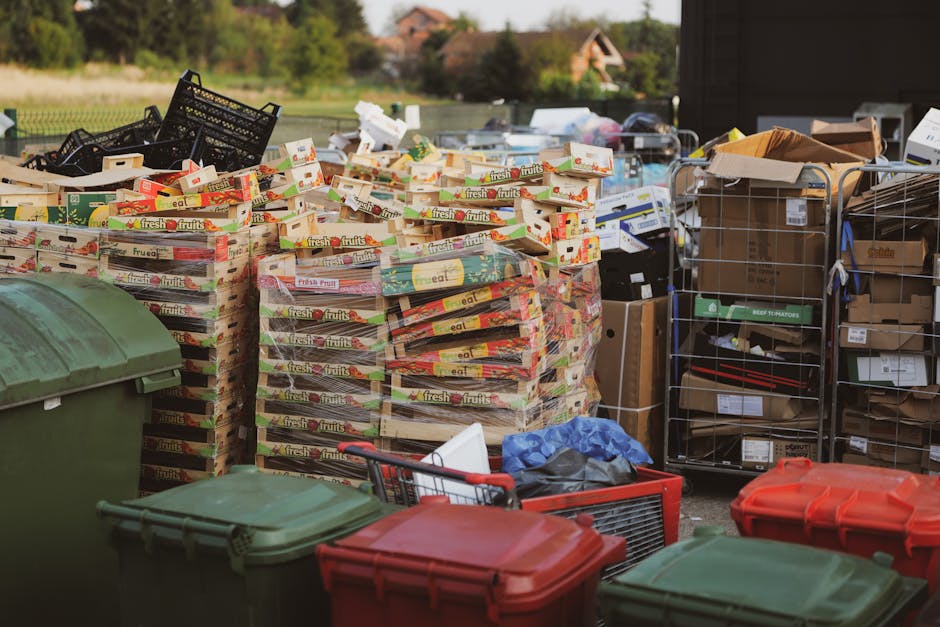
Cheap rubbish collection for Feltham High Street TW13

If you need cheap rubbish collection for Feltham High Street TW13, you probably want two things at once: a fair price and a service that simply gets on with it. No drama. No hidden add-ons. No rubbish left behind because a collection was rushed. That is especially true around a busy stretch like Feltham High Street, where access, parking, timing, and the type of waste all affect what the cheapest sensible option really is.
This guide explains how affordable rubbish collection works, what affects the final cost, and how to choose the right method for a small clear-out, a bulky item removal, a shop refit, or a bigger domestic job. You will also find practical tips, a comparison table, a real-world example, and a checklist you can actually use. Let's face it, waste removal is rarely glamorous. But done properly, it saves time, stress, and often money too.
Why Cheap rubbish collection for Feltham High Street TW13 Matters
Cheap rubbish collection matters because waste builds up faster than people expect. A few broken shelves in a flat, old packaging from a shop delivery, a cleared-out loft, a cracked wardrobe, and suddenly the hallway looks like a storage problem with nowhere to go. On Feltham High Street, where homes and businesses sit close together, that clutter can become a nuisance very quickly.
Cost matters too. But cheap should not mean careless. The real goal is value: a service that removes waste efficiently, handles it lawfully, and suits the access and timing of your property. If you are on a tight budget, you need to avoid paying for the wrong method. For example, a full skip may be overkill for a few bulky items, while a man-and-van style collection may be pricier than a simple skip if you already have space for loading. The trick is matching the service to the job.
That is where local experience helps. Busy streets often mean limited waiting space, the occasional awkward loading point, and less tolerance for blocked access. A well-planned collection can make a surprisingly big difference. And yes, sometimes the cheapest option is the one that turns up once, loads properly, and leaves the area tidy first time.
For readers comparing service types, it can help to start with the broader rubbish removal service pages, then narrow down to the best method for your waste type and timing. If your job is more of a domestic clear-out, domestic skip hire can also be a practical route, depending on space and volume.
How Cheap rubbish collection for Feltham High Street TW13 Works
Most affordable rubbish collection jobs follow a fairly simple pattern. First, you describe the waste. Then the provider estimates the volume, the type of materials, and any access issues. After that, they recommend a method. Easy enough in theory. In practice, the more accurate your description, the less likely you are to pay for the wrong size or type of service.
Typical questions a provider will ask include:
- What kind of rubbish needs removing?
- Roughly how much space does it take up?
- Is it household waste, garden waste, builders' waste, or mixed?
- Can a vehicle park close by?
- Is there a lift, stairs, narrow alley, or gated access to consider?
- Do you need same-day or scheduled collection?
Once those details are clear, the job usually falls into one of a few formats: a full waste collection, a man-and-van load, grab hire, a skip, or a wait-and-load arrangement. Each has a different cost structure. To see how this compares with broader waste handling options, you may also want to look at skip sizes and prices and wait-and-load skip hire.
For busy properties, especially where you cannot leave a container on the street, a wait-and-load skip hire arrangement can be a neat compromise. The vehicle arrives, you load quickly, and it goes. No permit left sitting around, no container occupying space all week. Not always the cheapest on paper, but sometimes the cheapest overall once you factor in hassle.
Key Benefits and Practical Advantages
The main benefit of cheap rubbish collection is obvious: you clear space without overspending. But the real advantage is usually a bit broader than that. A well-chosen collection service can reduce disruption, improve safety, and save you time you would otherwise spend loading a car, making multiple tip runs, or trying to work out where to put the extra mattress that is somehow always in the way.
Here are the practical benefits people notice most:
- Lower overall cost: especially when you choose the right size and service type first time.
- Less physical effort: useful if the waste is bulky, dusty, or simply too awkward to move alone.
- Faster turnaround: a good team can remove a load in one visit.
- Better site tidiness: particularly helpful if you are preparing a property for sale, rent, or refurbishment.
- Safer handling: safer than carrying broken items through cramped hallways or down shared stairs.
- Waste sorting support: can help keep recyclable and non-recyclable materials separate.
There is also the less obvious benefit of making a better decision under pressure. When rubbish piles up, people often rush. They book too much or too little, then end up paying twice. A cheap rubbish collection service should help you avoid that spiral. If you are unsure what can go in the load, it is worth checking what can go in a skip before you book. That little bit of prep can save a headache later.
For a lot of households, garage and loft jobs are where the savings really show. A few old boxes, a broken chair, some flattened packaging, and a neglected exercise bike from three years ago... suddenly it all adds up. For that kind of project, garage and loft clearance is often a smart companion service.
Who This Is For and When It Makes Sense
This service is for anyone who needs waste gone without paying for more than they need. That sounds obvious, but it covers quite a few different situations.
You may be a good fit if you are:
- a homeowner clearing clutter before decorating
- a tenant moving out and needing a last-minute clear-up
- a landlord dealing with leftover rubbish after a tenancy
- a shop owner dealing with packaging, fixtures, or display waste
- a tradesperson with light construction debris
- a family tidying after a garage, shed, or loft sort-out
It also makes sense when the waste is awkward rather than enormous. Think bulky sofa parts, broken wardrobes, old underlay, mixed bagged rubbish, or a few renovation leftovers. If you have heavier or more specialised material, another service may suit you better. For example, construction projects often fit better with builders waste removal or construction waste disposal, while a demolition job may call for demolition waste removal.
Truth be told, the phrase "cheap" means different things to different people. For one customer it means the lowest quote. For another it means the best value after considering time, labour, access, and the risk of extra charges. Both views are fair. The best choice is usually the one that gets the job done cleanly, with no unpleasant surprises on collection day.
Step-by-Step Guidance
If you want the most cost-effective result, work through the job in a calm, practical order. This is where many people save money without cutting corners.
- Sort the waste into rough categories. Put household waste, recyclable items, bulky furniture, and anything potentially restricted into separate piles.
- Estimate volume honestly. If you are unsure, take a few photos from different angles. It is a small step, but it helps a lot.
- Check access. Narrow stairwells, loading restrictions, and busy roadside access can change the best method.
- Decide whether you need labour included. If you can load the waste yourself, that may reduce cost. If not, a collection crew or man-and-van arrangement could be the smarter option.
- Ask about restricted items. Fridges, mattresses, sofas, and hazardous materials often have separate handling requirements. More on that in a moment.
- Choose the method that suits the site. Skip, grab hire, wait-and-load, or full rubbish removal each solve a different problem.
- Confirm timing and payment terms. A clear booking avoids delays and confusion on the day.
If your waste is mixed and you want fewer trips, a man and van style collection may suit you well. It is often a good fit for mixed domestic items, especially where lifting a lot of material to street level would be awkward. For heavier external loads or site waste, you might compare it with grab hire services.
One small practical tip: if you are clearing a property in the morning, try to do your sorting the night before while you still have good light. It sounds minor, but a cool evening and a torch in one hand is not the best way to decide whether a bag contains clean cardboard or wet mixed waste. We've all been there, or something close to it.
Expert Tips for Better Results
A cheap quote is only useful if the job still works on the day. The following habits help keep costs low without creating problems later.
- Photograph everything before you book. Good photos reduce guesswork.
- Keep prohibited items separate. That avoids collection delays or extra handling fees.
- Break down furniture where safe to do so. A dismantled wardrobe takes much less space than a whole one.
- Stack items neatly. Loose piles waste room and can push you into a larger service than necessary.
- Plan around access times. On a busy road, even ten minutes matters.
- Ask about recycling. Responsible sorting can reduce waste going to landfill and sometimes helps keep the service more efficient.
If you are dealing with business waste, confidential materials, or office clear-outs, it is worth choosing a specialist route rather than treating everything as generic rubbish. office clearance and confidential shredding are better fits than a basic mixed-waste collection when paperwork and data security are involved.
Another small but useful habit: ask what happens if the load turns out to be slightly bigger than expected. That is not pessimism. It is just good planning. Clear providers will explain the adjustment before work begins, which is exactly what you want.
Common Mistakes to Avoid
People usually overpay or run into trouble because of a handful of predictable mistakes. The good news is they are easy to avoid once you know them.
- Booking the wrong method. A skip is not always the cheapest answer, and a van collection is not always the fastest.
- Underestimating the volume. This is the classic one. A half-full estimate becomes a full load very quickly.
- Mixing restricted waste into general rubbish. That can complicate collection and disposal.
- Forgetting access issues. A great quote means little if the vehicle cannot get close enough.
- Ignoring permits where needed. If a container needs to sit on a public road, permits may come into play.
- Choosing only on headline price. The lowest price can be the most expensive if it leads to delays or add-ons.
For road-based containers, check permit requirements in advance and compare them with the alternative of a collection service. On some streets, a simple skip hire permits page can help you understand whether a permit issue is part of the decision. If you already know a container is not practical, rubbish removal may be the cleaner route.
And yes, people do sometimes forget the fridge. Or the mattress. Or the small pile of mystery cables in the corner. It happens more than anyone admits.
Tools, Resources and Recommendations
You do not need fancy tools to organise an affordable rubbish collection, but a few simple resources make the process easier.
- Measuring tape: useful for checking bulky items and access points.
- Phone camera: quick photos help with accurate quotations.
- Labels or tape: handy for separating keep, donate, recycle, and remove piles.
- Strong sacks or boxes: better than loose items scattered around the room.
- A rough list of items: saves time when asking for pricing guidance.
On the service side, these pages can help you compare options and expectations before you book:
- pricing and quotes for understanding how estimates are put together
- skip sizes and prices for container-based jobs
- waste recycling services for the sorting and recovery side of the process
- payment and security if you want reassurance around transactions
- insurance and safety for a clearer view of operational expectations
If your job is a smaller domestic clear-out, house clearance can sometimes be the simplest all-in solution. If it is a garden job rather than indoor clutter, garden waste removal is usually the better match. Matching the service to the waste really does make a difference.
Law, Compliance, Standards, or Best Practice
Any rubbish collection service should be careful about how waste is handled, stored, moved, and passed on for recovery or disposal. You do not need to become an expert in waste regulations to book a collection, but you should expect a provider to work responsibly and to treat waste seriously.
In practical terms, that means a few things. First, hazardous or specialist waste should not be mixed in with ordinary rubbish. Second, staff handling waste should use sensible safety practices. Third, waste should be dealt with through lawful channels and with attention to recycling where possible. That is basic best practice, really, and it should be taken for granted.
If the job involves items such as appliances, mattresses, sofas, or potentially hazardous materials, the service should be chosen carefully. For example, fridge and appliance removal is a better fit for white goods than a general pile of mixed waste. Likewise, mattress and sofa disposal helps avoid awkward loading and improper handling.
For builders and site managers, compliance matters even more. Dust, sharp edges, mixed rubble, and access management all need attention. In those cases, construction waste clearance and site clearance are worth exploring because they align better with the realities of the work. If hazardous materials are involved, use the dedicated hazardous waste disposal route rather than guessing. Better safe than sorry, as they say.
Options, Methods, or Comparison Table
There is no single best method for every rubbish job. The cheapest practical option depends on volume, access, urgency, and whether you can load the waste yourself. Here is a plain-English comparison.
| Method | Best for | Strengths | Trade-offs |
|---|---|---|---|
| Rubbish removal / man-and-van | Mixed household waste, bulky items, smaller clear-outs | Quick, flexible, often ideal where access is tight | Can cost more than self-loading if the load is large |
| Skip hire | Ongoing projects, DIY waste, larger volumes | Simple if you can load over time | May need space, permits, and careful sizing |
| Wait-and-load | Places with limited parking or no room for a skip | No long-term street occupation, useful in busier areas | Requires prompt loading and good preparation |
| Grab hire | Heavier waste, access to front loading, site jobs | Efficient for larger piles and loose material | Not always the best for confined indoor clear-outs |
If you are deciding between these, ask one simple question: do I need labour, space, or speed most of all? That answer usually points you to the right method. For some customers on Feltham High Street, the answer is a clean, fast collection. For others, it is a container with time to fill it properly. One is not universally better than the other.
For commercial properties, a dedicated commercial skip hire arrangement may make more sense than ad hoc collection, especially if the waste is regular rather than one-off. For trade work, builders skip hire is often the more natural fit.
Case Study or Real-World Example
Here is a realistic example. A small retail unit near Feltham High Street is refitting a display area after a product change. The waste includes cardboard, broken shelving, a few damaged fixtures, plastic wrap, and one awkwardly large panel. The manager initially assumes they need a full skip.
After a quick review of the access, it turns out the frontage is busy and there is only limited stopping space. Leaving a container for days would be inconvenient. The better option is a timed collection with a vehicle that can load the mixed waste in one visit. A few items are broken down beforehand, and the rest are stacked neatly. The whole job is cleared without blocking the business for long, and the team avoids paying for space they would not have used.
That is the kind of decision that saves money in the real world. Not because it is fancy, just because it fits the situation. The same logic applies to domestic jobs too. A family doing a Saturday loft sort might think they need a skip, but if the waste is mostly loose and mixed, a direct collection may be simpler. On the other hand, a home renovation with ongoing waste could be better served by a container. The answer changes with the job.
And honestly, the best jobs are the ones where the customer says, "That was easier than I expected." That is usually a sign the service matched the problem well.
Practical Checklist
Use this quick checklist before you book cheap rubbish collection for Feltham High Street TW13.
- Have I sorted the waste into clear groups?
- Do I know roughly how much needs removing?
- Have I taken photos from a couple of angles?
- Is there enough access for the collection vehicle?
- Have I separated any restricted items?
- Do I need labour included, or can I load it myself?
- Would a skip, van collection, grab hire, or wait-and-load be best?
- Have I checked whether permits may be needed?
- Have I confirmed the timing and price basis?
- Do I understand what happens after collection, including recycling where possible?
Expert summary: the cheapest rubbish collection is rarely the one with the lowest headline number. It is the one that fits your waste type, your access, and your timing without creating rework or extra charges.
If you want to learn more about the company behind these services, you can read about about us and review the general terms and conditions before booking. That is a small thing, but it helps people feel more comfortable. Fair enough.
Get a free quote today and see how much you can save.
Conclusion
Cheap rubbish collection for Feltham High Street TW13 is not just about finding the lowest price. It is about getting the right collection method for the amount of waste, the access you have, and the speed you need. When those pieces line up, the job feels straightforward. Clean. Efficient. Done.
For small domestic clear-outs, van-based collection may be the easiest win. For ongoing renovation work, a skip or grab-based approach may be better. For businesses, timing and tidiness matter just as much as cost. Choose carefully, plan a little, and you will usually save both money and hassle.
If you are still weighing up the details, a final check of the service pages on pricing, waste handling, and collection options is often enough to point you in the right direction. Then you can get on with the more interesting parts of life. Like not tripping over an old wardrobe on the landing.
Frequently Asked Questions
What is the cheapest way to get rubbish collected on Feltham High Street?
The cheapest option depends on the volume and type of waste. For small loads, a direct rubbish collection or man-and-van service can be better value than a skip. For larger jobs, a skip may work out cheaper if you can load it yourself.
Is cheap rubbish collection suitable for bulky items?
Yes, especially if the items are awkward to move and you want them taken away in one visit. Sofas, wardrobes, mattresses, and similar items are often better handled through a specialist collection rather than standard household waste disposal.
Do I need a permit for rubbish collection?
Usually not for a direct collection, but permits may be relevant if you want a skip placed on a public road. If you are unsure, check the collection method first, then decide whether skip hire permits are part of the picture.
How do I know whether a skip or a rubbish collection is better?
Ask whether you need time or speed. If you want to fill waste over several days, a skip may suit you. If you want it gone quickly and have limited access, rubbish collection or wait-and-load is often more practical.
Can I mix garden waste and general rubbish in one load?
Sometimes yes, but mixed loads can affect pricing and sorting. If a load is mostly garden material, garden waste removal may be more efficient. For mixed waste, ask before booking so you know how it will be handled.
What should I do with fridges, freezers, and appliances?
Do not assume they can go in a normal mixed load. White goods often need separate handling, so fridge and appliance removal is the safer choice.
Is same-day rubbish collection available?
It can be, depending on demand and vehicle availability. If timing is urgent, look at same-day skip hire or ask whether a same-day collection slot is possible for your waste type.
What kind of waste should never be mixed in casually?
Hazardous materials and certain specialist items should be handled separately. If you are dealing with paint, chemicals, or other risky materials, use a dedicated route such as hazardous waste disposal.
How can I keep costs down without cutting corners?
Sort waste before collection, break down bulky items where safe, take photos for accurate quoting, and choose the method that fits the job rather than the one that just sounds cheapest. Small planning steps go a long way.
What if I only have a small amount of rubbish?
For a few items, a full skip may be unnecessary. A smaller collection, or even a carefully planned van-based pickup, may be more cost-effective. That is often the sweet spot for flat clear-outs and quick tidy-ups.
Can rubbish collection help with a house clearance?
Yes. If the job involves multiple rooms, old furniture, and mixed household waste, house clearance can be a practical way to remove everything in a single organised visit.
How do I know if the service is trustworthy?
Look for clear pricing, sensible explanations of what is included, straightforward policies, and proper safety and payment information. Pages such as insurance and safety and payment and security are useful signs that the operator takes the basics seriously.
What is the best next step if I am ready to book?
Gather a few photos, note the waste type, check access, and review the pricing guidance first. Then book the service that best matches your situation. If you want to get moving, book online is the most direct next step.
A tidy space changes the way a place feels. Sometimes that is the whole point.